The process of laser tattoo removal in Chennai involves the use of laser energy to break down the tattoo pigments into smaller particles, which can be disposed of by the body. The choice of laser technology depends on the tattoo that has to be treated; pico or Q-Switched technology may be used. At Zenderma, we carry out a dermatologist-led assessment before treatment to evaluate your tattoo and recommend the most suitable approach.
Key Takeaways
- Laser tattoo removal is a process, not a one-session procedure.
- Pico and Q-switched lasers can target tattoo pigments by delivering very small bursts of energy.
- Tattoo colours, ink depth, size and age can all affect how fast a tattoo fades.
- At Zenderma, we typically recommend 6–10 treatment sessions, often spaced 6–8 weeks apart, although the exact number depends on your tattoo and how your skin responds.
- Our published pricing guide indicates an approximate range of ₹3,000–₹12,000 per session for tattoo removal service. The final cost varies according to individual treatment requirements.
Intro: Laser Tattoo Removal?
Tattooing may seem permanent, yet its pigment can be targeted without the removal of the skin surrounding it via surgery.
Laser tattoo removal is achieved by directing very short bursts of energy at the pigment in the tattoo. The energy shatters the pigment, and then the body’s immune system slowly removes the pieces. The laser does more than just “erase” the tattoo during the appointment.
If you are on the lookout for laser tattoo removal in Chennai, then there are three significant things: pico laser, Q-switched laser and post-inflammatory hyperpigmentation.
According to the American Academy of Dermatology (AAD), contemporary lasers have superseded traditional tattoo-removal methods because they are able to remove tattoos more safely and effectively when handled properly.
What Tattoos Can Be Removed?
Next, you need to think about the tattoo itself, because not all designs react the same. The tattoo removal process depends on many factors:
- Ink colour: Black and various dark colours often react differently than green, blue, yellow or red pigments.
- Ink Depth: Darker ink may demand more treatment.
- Tattoo Size: Larger tattoos require more laser passes and more treatment time.
- Age of tattoo: Existing tattoos may have already faded a bit on their own.
- Ink composition: Professional and cosmetic tattoos may have different pigments.
- Skin type: Treatment planning is affected by skin tone and inclination towards pigmentation.
“In a systematic review published in Lasers in Medical Science, picosecond lasers showed useful results for several tattoo colours, but the quality of evidence varied between studies.”
A Handy Guideline of Thumb
If the tattoo is multicoloured, deep or previously treated, expect the dermatologist to plan the treatment more carefully rather than promise speedy eradication.
Pico Laser Vs Q-Switched Laser – What’s The Difference?
Another crucial aspect of the treatment approach is technology selection.
General distinctions between pico and Q-switched laser technologies.
| Article | Pico laser | Q-switched laser |
| Pulse length | Picosecond time scale | Nanosecond range |
| Principal activity | Rapid pigment break-up | Selective pigment breakdown |
| Common usage | Tattoo & pigment removal | Tattoo & pigment removal |
| Treatment planning | Depends on the ink and skin | Depends on skin and ink |
| Sessions anticipated | Customised | Tailored |
Picosecond lasers generate <1 nanosecond pulses and induce mainly photoacoustic effects, assisting in pigment fragmentation and minimising heat transfer to adjacent tissue.
At Zenderma, we provide laser tattoo removal using Pico Laser Technology with personalised treatment plans based on your tattoo’s age, depth, colour and your skin sensitivity. However, “pico” technology does not necessarily mean every tattoo will fade faster, as treatment response varies from person to person.
What Occurs During Laser Tattoo Removal?
The surgery itself is quite rapid, but careful preparation is required.
1. Consultation & Assessment
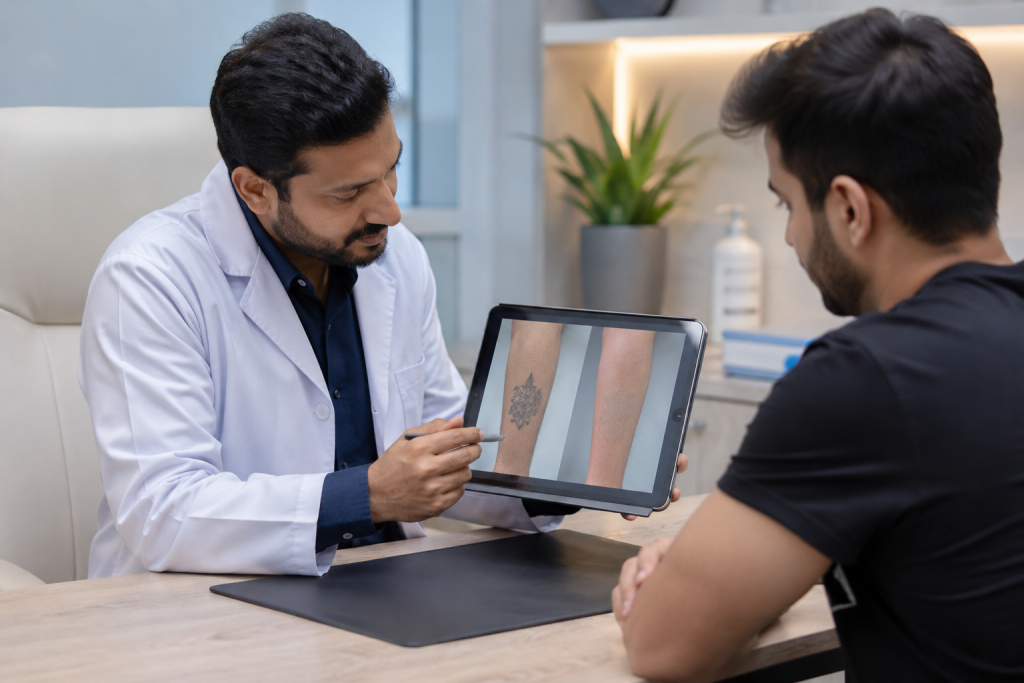
The dermatologist will look at the size, location, colour, depth and history of treatment of the tattoo.
2. Preparing the Skin
The treatment area should be clean and without any extra materials. Do not sun-tan or expose skin to the sun prior to treatment.
3. Use of Laser
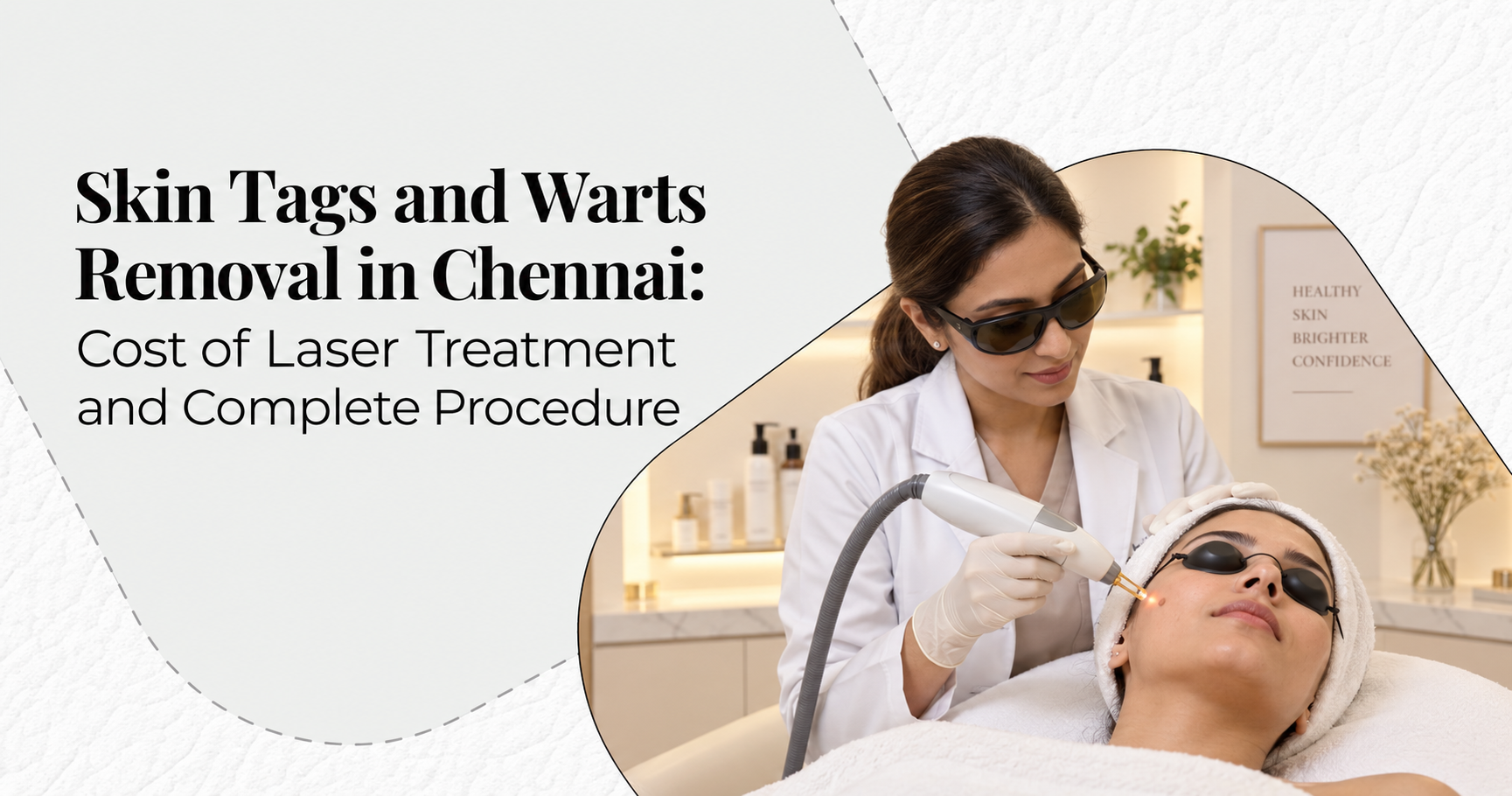
Protective eyewear is worn as the laser delivers regulated pulses to the tattoo pigment.
4. Comfort and Cooling Measures
Cooling might assist in making the operation more comfortable, depending on the technology and treatment plan.
5. Skin Responds Immediately
Post-treatment, you may have temporary redness and swelling, localised bleeding, blistering or dark/light patches. Effects vary depending on the settings of the laser and how your skin reacts.
6. Slow Pigment Fading
After the appointment, the body continues to clear fractured pigment, which is why appointments need to be spaced out.
How Many Sessions?
The biggest mistake is thinking a tattoo would fade after one appointment.
At Zenderma, we generally recommend around 6–10 treatment sessions, usually spaced 6–8 weeks apart. The exact number depends on factors such as your tattoo’s size, colours, ink depth and how your skin responds during treatment.
Treatment Schedule
Consultation → Session 1 → Healing → Pigment clearing → Review → Next session
The AAD also notes why numerous sessions are necessary: laser treatment can’t properly remove all layers of tattoo pigment at once, and the body requires time to eliminate the fractured ink.
Full eradication is not assured. Some tattoos may fade significantly yet not become completely invisible.
How Much Does Laser Tattoo Removal Cost?
Cost is not just the term “laser” but the tattoo as well. Our current 2026 pricing guide indicates that the approximate laser treatment cost is about ₹3,000–₹12,000 per session for tattoo removal service. We use technologies including Q-switched Nd: YAG and Pico Laser Technology, with the final cost depending on your individual treatment plan.
Factors influencing the price of tattoo removal laser therapy.
| Cost side | Effect on treatment costs |
| Size of tattoo | More area to treat with larger tattoos. |
| Colours of the ink | Different wavelengths may be needed for many hues. |
| Depth of ink | Deeper pigment may need additional treatment. |
| Number of sessions | The more sessions you have, the more costly the overall treatment becomes. |
| Past attempts at removal | Pre-existing scars or skin changes may impair planning. |
| Technology | Different laser systems need different treatments. |
| Clinical supervision | Dermatologist-led care adds to the cost of medical treatment. |
Therefore, it can be misleading to compare laser clinics based only on the lowest quoted price. The AAD stresses that the individual doing the tattoo removal should be trained and have medical expertise for safety and results.
Recovery: What to Expect After Treatment
Recovery is normally not difficult, but you will need to protect the area that is treated. After treatment at Zenderma, you may experience temporary redness, swelling, black or purple spots, blistering or pigment changes. These reactions are generally temporary and vary according to your skin and treatment settings.
Aftercare Checklist
- Keep the area clean and dry as directed.
- Don’t pick, rub or itch.
- Don’t get too much sun.
- Do not swim until the skin has mended.
- Use any ointments or dressings that your doctor prescribes.
- Apply skincare products only after following your dermatologist’s directions.
- Go to follow-up visits as recommended.
AAD notes that light or dark areas can temporarily emerge after tattoo removal and that scarring, burns, and textural changes are possible risks, particularly when therapy is not done properly.
Is Laser Tattoo Removal Safe for Indian Skin?
Laser treatment can be performed on darker skin types, but settings need to be carefully selected. The AAD warns that darker skin is more sensitive to burns and dark markings after laser treatments; thus, familiarity with varied skin types is particularly crucial.
Complications that may occur include:
- Transient erythema or oedema
- Crusting or blistering
- Pigmentation
- Loss of colour
- Disease
- Marks
- Changes in the texture of the skin
DermNet also mentions changes in pigmentation, blistering and scarring as possible adverse effects of picosecond laser treatment. Therefore, your skin and tattoo need to be assessed by a skin doctor in Chennai to determine the therapy parameters.
Also, learn more on Laser Hair Removal Treatment.
Why Select Zenderma for Laser Tattoo Removal in Chennai?
It’s not just the technology, but the person evaluating and treating the skin that counts too.
At Zenderma, we provide dermatologist-led laser tattoo removal using FDA-approved technologies and personalised treatment plans. We use tattoo removal services like Pico Laser Technology with cryo-cooling and tailor each treatment based on your tattoo’s age, depth, colour and your skin sensitivity.
You can visit us at 18, Cenotaph Road, Rathna Nagar, Teynampet, Chennai – 600018. Our dermatology team includes Dr Vignesh Karthick, MD, DVL, a skin doctor in Chennai with over 14 years of clinical experience, along with Dr Divya Poulose and Dr Athira Deepthi M.
To learn more, explore our Laser Tattoo Removal Treatment page, our Laser Treatment Pricing Guide and our Tattoo Removal Do’s and Don’ts before booking your consultation.
Conclusion: Is Laser Tattoo Removal for You?
Laser tattoo removal in Chennai may effectively reduce undesired ink significantly when treatment is chosen based on tattoo colour, depth, size, skin features and previous treatment history. Pico- and Q-switched lasers work well to break down the pigment in a tattoo. It takes time for the body to remove the particles from the system, and many treatments are typical.
There is not one flat fee that covers the cost of laser therapy; it depends on how many sessions are required and the peculiarities of the tattoo. For those shopping around for laser clinics, look beyond pricing and focus on medical assessment, the right technology, realistic expectations and expert aftercare.
| Ready to discuss your unwanted tattoo? Book a dermatologist-led consultation with us at Zenderma in Teynampet, Chennai, for a personalised treatment assessment. |
FAQs
1. What is laser tattoo removal?
Laser tattoo removal involves the use of concentrated laser light to break up the pigment in a tattoo into little fragments. Your body then gradually removes these fragments. You may require more than one session because the pigment is eliminated gradually, not completely at once.
2. How many sessions do you need?
You may require about 6 to 10 sessions, but it depends on the size of the tattoo, the colour, the depth and the individual’s response. Usually, appointments are spaced several weeks apart to allow the body to eliminate fractured pigment and the skin to recover.
3. What is the laser treatment cost for the tattoo removal procedure in Chennai?
The indicative cost may be in the region of about ₹3,000–₹12,000 per session, based on our published pricing guide at Zenderma. The ultimate price depends on the size of the tattoo, the colour, the depth, the technology utilised and the number of sessions needed.
4. Can all colours of tattoos be removed?
As a result of the fact that every tattoo ink responds differently to lasers that emit different wavelengths, it is not guaranteed that every ink colour can be completely removed. Every multi-colour tattoo of yours needs to be analysed individually for this purpose.
5. Is pico laser superior to Q-switched laser?
Neither technology is better for all tattoos. Your dermatologist will examine the colour of the ink, the depth of the tattoo, your skin type, where it is on your body and if it has been treated before to determine the best laser technique.
6. Does laser tattoo removal hurt?
You might feel heat, a clicking sensation, tingling, or some pain during the treatment. The sensations you will feel will depend on the size and position of your tattoo, laser settings, and individual sensitivity level.
7. What is the downtime after tattoo removal?
After laser tattoo removal, you might experience temporary redness, swelling, discolouration, blisters, and crusts. Leave the skin alone while it heals. Following the aftercare instructions provided by your dermatologist can help support proper healing and reduce the risk of complications.
8. Will I form scars following the laser treatment for the removal of my tattoo?
There are several side effects associated with laser tattoo removal, one of them being scarring, and the possibility of that can be reduced with the correct use of laser settings. Carefully following the recommended aftercare and avoiding picking at the treated area may further help minimise the risk of scarring.
9. Can I have an old tattoo removed completely?
While there might be a lot of fading in place, complete removal is not a guarantee at all times. It depends on a variety of factors, including the age of the tattoo, type of ink used, depth of the pigmentation, colour, location of the tattoo, type of skin you have, and how your body reacts to the process.
10. Can I have laser tattoo removal performed before getting my tattoo covered?
In some cases, laser tattoo removal may be used in order to fade the undesired tattoo prior to getting the cover-up tattoo. Fading the existing ink can provide the tattoo artist with greater flexibility when creating a new design and may improve the final appearance of the cover-up.

Dr. Vignesh Karthik, MD (DVL)
Meet Dr. Vignesh Karthik, MD (DVL) – the expert mind behind Zenderma. With 15+ years of dermatology experience, he leads with precision and compassion. From advanced skin therapies to aesthetic care, your skin is in trusted hands. At Zenderma, we blend science with a personalized approach for every skin type. It’s not just treatment – it’s expert-driven transformation.