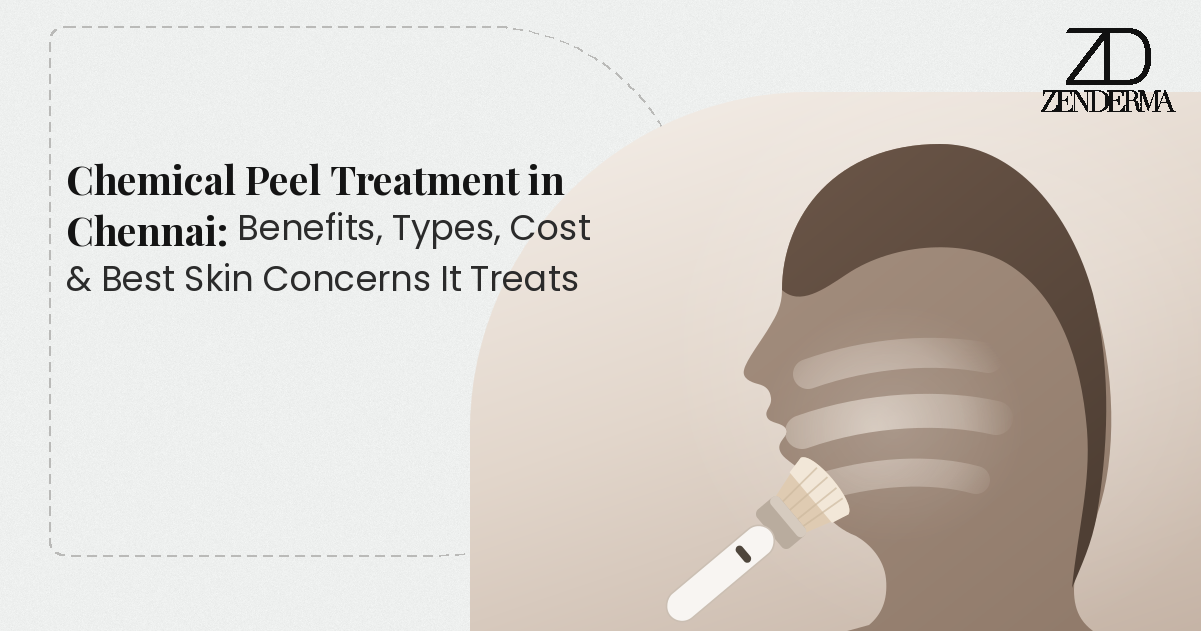
Chemical peel treatment in Chennai is a dermatologist-supervised procedure used to improve acne, pigmentation, uneven tone, dullness and selected signs of ageing. Different peel depths and ingredients are chosen according to the skin concern and sensitivity. At Zenderma, we carry out a personalised assessment to determine whether a chemical peel is suitable for your skin. We also help you understand the treatment, expected recovery and chemical peel price in India so you can make an informed decision.
Key Takeaways
- Chemical peels exfoliate the skin in a controlled way and can improve selected concerns, including acne, pigmentation, uneven colour, dullness and rough texture.
- The best peel depends on the concern, because superficial, medium-depth and deeper peels do not have the same effects or recovery requirements.
- Chemical peel prices in India vary according to peel type, treatment area, clinic, dermatologist expertise, and the number of sessions required.
- Skin of colour needs careful planning, because irritation from a peel can contribute to post-inflammatory hyperpigmentation.
- Professional assessment matters: the American Academy of Dermatology recommends chemical peels under the supervision of a trained, licensed provider.
Intro: What Is a Chemical Peel?
A smoother complexion does not always require an aggressive procedure. A chemical peel uses a carefully selected chemical solution to exfoliate targeted layers of skin and encourage renewal.
The treatment can be superficial, medium-depth or deep, depending on how deeply the solution acts. The American Academy of Dermatology (AAD) notes that dermatologists use chemical peels for concerns including some forms of acne, discolouration, dullness, fine lines, melasma and sun-damaged skin.
For anyone researching a chemical peel treatment in Chennai, three related entities are particularly important: chemical peels, post-inflammatory hyperpigmentation (PIH) and salicylic acid. Understanding the difference helps you avoid choosing a peel simply because it is popular online.
A peel is not simply about making the skin “lighter”. The medical objective is to improve a specific skin concern while protecting the skin barrier.
What Skin Concerns Can Chemical Peels Treat?
The treatment becomes more useful when the peel is matched to the actual concern.
Acne and Congested Skin
Some superficial peels can be used as part of acne management. Salicylic acid, for example, has exfoliating and comedolytic properties that can help address blocked pores.
Pigmentation and Uneven Skin Tone
Chemical peels may help improve selected forms of hyperpigmentation by removing pigmented superficial skin cells and encouraging renewal. However, pigmentation has many causes. Melasma, post-acne marks, sun-related pigmentation and other pigmentary conditions should not automatically be treated with the same peel.
Dullness and Rough Texture
Accumulated dead skin cells can make the complexion appear uneven and rough. Appropriate superficial exfoliation can help reveal smoother-looking skin and improve overall clarity.
Early Signs of Ageing
Depending on the formulation and depth, professional peels may improve the appearance of fine lines, uneven tone and sun-damaged skin. They should be selected according to the skin’s condition rather than used as a generic anti-ageing treatment.
Selected Acne Marks
Peels may be considered for post-acne pigmentation, but depressed acne scars are different from dark acne marks. Structural scars may require procedures such as microneedling, MNRF, subcision or laser resurfacing instead.
Which Type of Chemical Peel Is Suitable?
The depth of the peel influences what it can address, how much downtime may occur and what risks need to be considered.
Table: General differences between chemical peel depths and their potential uses.
| Peel category | Main action | Common clinical uses | Recovery |
| Superficial peel | Acts mainly on the outermost layers | Dullness, mild pigmentation, acne and uneven texture | Usually minimal |
| Medium-depth peel | Penetrates further into the skin | Selected pigmentation, texture and photoageing concerns | More noticeable recovery |
| Deep peel | Reaches deeper skin layers | Selected severe skin concerns under specialist care | Longer recovery and greater risk |
The exact acid, concentration, preparation and application time also influence the result. A dermatologist should decide the formulation and depth after assessing your skin.
At Zenderma, we offer Advanced Brightening Peels as medical-grade treatments that are designed to address concerns such as pigmentation, sun damage, melasma and selected acne-scar concerns.
Chemical Peel Treatment in Chennai: What Are the Benefits?
Once the peel has been correctly selected, several improvements may be possible.
1. Brighter-Looking Skin
Controlled exfoliation removes superficial dead cells, which can make the complexion look fresher and more even.
2. Improved Skin Texture
By encouraging the removal of damaged superficial cells, peels can make rough or uneven skin feel smoother.
3. Support for Acne Management
Some chemical agents can help reduce comedones and improve mild-to-moderate acne when incorporated into an appropriate medical plan.
4. Reduction in Uneven Pigmentation
Selected superficial peels may improve certain forms of superficial pigmentation, particularly when combined with appropriate home care and photoprotection.
5. Improvement in Sun-Damaged Appearance
Professional exfoliation can be incorporated into treatment plans for certain manifestations of photoageing, although ongoing UV protection remains essential.
6. Minimal Downtime With Some Superficial Peels
Not every peel causes substantial visible peeling. At Zenderma, we offer Soft Gel Peels as gentle skin-renewal treatments with minimal disruption. We may recommend them for suitable patients, including those with sensitive skin, following a dermatologist’s assessment.
How Much Does a Chemical Peel Cost in India?
The chemical peel price in India is not a single fixed figure because the treatment varies considerably between patients and clinics.
Published Indian healthcare pricing information places chemical peels broadly around ₹1,500 to ₹30,000 per session, depending on the depth and type of peel. Yashoda Hospitals, for example, lists indicative ranges of ₹1,500–₹5,000 for superficial peels, ₹4,000–₹10,000 for medium-depth peels and ₹10,000–₹30,000 or more for deep peels. These are general market figures, not Zenderma’s pricing.
Table: Factors that influence face peel cost and chemical peel pricing
| Factor | Why it affects cost |
| Peel formulation | Different acids and professional formulations have different costs. |
| Treatment depth | Deeper procedures require more specialist management. |
| Treatment area | Face, neck and other areas may have different requirements. |
| Skin concern | Pigmentation, acne and ageing may require different formulations. |
| Number of sessions | Some concerns respond progressively over a series. |
| Clinical expertise | Dermatologist-led assessment and supervision affect treatment delivery. |
| Aftercare | Prescribed skincare or medicines may form part of the overall plan. |
Therefore, face peels cost should ideally be discussed after a clinical assessment rather than selected from the cheapest advertised package.

What Happens During a Chemical Peel?
Knowing what to expect can make the treatment process much less intimidating.
Step 1: Skin Assessment
Your dermatologist reviews your concerns, skin sensitivity, current skincare, previous treatments and medical history.
Step 2: Peel Selection
The appropriate formulation and strength are selected according to the condition being treated.
Step 3: Skin Preparation
The treatment area is cleansed and prepared before the peel is carefully applied.
Step 4: Controlled Application
The dermatologist applies the selected solution for a clinically appropriate duration. You may experience warmth, tingling or mild stinging depending on the formulation.
Step 5: Post-Treatment Care
Aftercare instructions are provided to protect the recovering skin and reduce avoidable irritation.
Step 6: Review
Your response is assessed before another session is considered.
This individualised approach is important because chemical-peel outcomes depend on patient selection, skin type, peel characteristics and treatment technique.
Are Chemical Peels Safe for Indian Skin?
They can be used safely in many people with darker skin tones, but skin of colour requires careful treatment planning.
Important Safety Points
- Do not choose a peel solely because it is trending online.
- Avoid unsupervised strong chemical peels at home.
- Tell your dermatologist about current medicines and skincare products.
- Follow preparation instructions carefully.
- Use sun protection after treatment.
- Do not scratch, pick or forcibly remove peeling skin.
- Report unusual swelling, blistering, severe pain or prolonged pigmentation promptly.
The FDA has also highlighted the risk of serious injuries from some chemical peel products when used without professional supervision.
Chemical Peel Aftercare: What Helps the Skin Recover?
The treatment does not finish when the peel is applied. Aftercare is part of the outcome.
Depending on the peel, your dermatologist may recommend:
- A gentle cleanser.
- Appropriate moisturisation.
- Broad-spectrum sunscreen.
- Temporary avoidance of strong exfoliating products.
- Avoidance of picking or peeling the skin manually.
- Reduced exposure to direct sunlight.
- A temporary pause from selected active skincare ingredients.
Recovery varies substantially by peel depth. According to the AAD, healing can range from around one day for a very superficial peel to 14 days or longer for a deep peel.
Why Choose Zenderma for Chemical Peel Treatment?
Choosing the right cosmetic skin care clinic is as important as choosing the treatment itself.
At Zenderma in Teynampet, Chennai, we believe every skin concern deserves a personalised, dermatologist-led assessment before treatment. Our team includes Dr Vignesh Karthick, MD DVL, with more than 14 years of clinical experience, alongside Dr Divya Poulose, MD, Dermatologist, and Dr Athira Deepthi M, MD, DVL, who provide comprehensive medical and aesthetic dermatology care.
We offer Advanced Brightening Peels for concerns such as pigmentation, sun damage, melasma and selected acne scars, while our Soft Gel Peels provide a gentler option for skin renewal.
To learn more about our treatment options, you can explore our Chemical Peel Types guide and our Chemical Peels vs Medifacials comparison.
Conclusion: Is a Chemical Peel Right for Your Skin?
A chemical peel treatment in Chennai can be a useful dermatologist-supervised option for selected cases of acne, pigmentation, dullness, uneven texture, sun damage and early signs of ageing. The key is not simply choosing the strongest peel but selecting the right formulation and depth for the actual skin concern.
The chemical peel price in India can vary considerably, so cost should be considered alongside medical assessment, treatment suitability, professional expertise, safety and aftercare.
A personalised consultation is the safest way to determine whether a peel is appropriate and which approach is most suitable.
| Book a dermatologist consultation at Zenderma in Teynampet, Chennai, to discuss your skin concern and treatment options. |
FAQS
1. What is a chemical peel treatment?
A chemical peel is a professional skin treatment that uses a controlled chemical solution to exfoliate selected layers of skin. You may be recommended a superficial, medium-depth or deeper peel depending on your concern, skin characteristics and treatment goals.
2. What skin problems can chemical peels treat?
Chemical peels can be used for selected cases of acne, pigmentation, uneven skin tone, dullness, rough texture, sun damage and fine lines. You should have the underlying concern assessed before choosing a specific peel.
3. How much does a chemical peel cost in India?
The chemical peel price in India varies according to the peel type, depth, treatment area, clinic and number of sessions. You may see prices ranging from approximately ₹1,500 to ₹30,000 per session in published Indian healthcare estimates.
4. Are chemical peels suitable for Indian skin?
Yes, chemical peels can be suitable for Indian skin when appropriately selected and professionally performed. You should consult a dermatologist experienced with skin of colour because irritation can increase the risk of post-inflammatory pigmentation.
5. What is the difference between a superficial and medium-depth peel?
A superficial peel works mainly on the outer layers of skin and generally has less recovery time. A medium-depth peel reaches further into the skin and may provide a stronger effect but usually involves more noticeable recovery.
6. Can chemical peels remove acne scars?
Chemical peels may help selected superficial acne marks and some texture concerns, but they do not remove every type of structural acne scar. You may need procedures such as laser, MNRF, microneedling or subcision for deeper scars.
7. How many chemical peel sessions will you need?
The number of sessions depends on your skin concern, peel type, response and treatment objective. You may require a series of superficial treatments rather than one aggressive procedure, particularly when gradual improvement is the safer approach.
8. Do chemical peels hurt?
You may experience temporary warmth, tingling or mild stinging during a peel. The sensation depends on the formulation and depth, and your dermatologist can explain what to expect before treatment. Most people find the discomfort manageable, and the sensation usually settles shortly after the procedure is completed.
9. How long does your skin take to recover after a peel?
Recovery depends on the peel depth. You may have little downtime after a superficial peel, while stronger peels can require substantially longer healing and more careful aftercare. Following the recommended aftercare routine can support proper healing and help you achieve the best possible treatment outcome.
10. Can chemical peels permanently remove pigmentation?
Chemical peels can improve selected pigmentation but cannot guarantee permanent removal. You may develop pigmentation again if the underlying cause, such as UV exposure or an ongoing inflammatory condition, is not appropriately managed.

Dr. Vignesh Karthik, MD (DVL)
Meet Dr. Vignesh Karthik, MD (DVL) – the expert mind behind Zenderma. With 15+ years of dermatology experience, he leads with precision and compassion. From advanced skin therapies to aesthetic care, your skin is in trusted hands. At Zenderma, we blend science with a personalized approach for every skin type. It’s not just treatment – it’s expert-driven transformation.