Active chemicals are not sufficient for acne-prone skin care, you must use them regularly to help heal skin naturally. In Zenderma’s advice, they give important habits that enhance healing like double cleansing and repairing the barrier. Follow the recommendations from the experts and make evidence-based life changes for a clearer and healthier complexion. Find out how to create a simpler routine and simultaneously keep inflammation at bay.
Introduction: Understanding Acne-Prone Skin Care
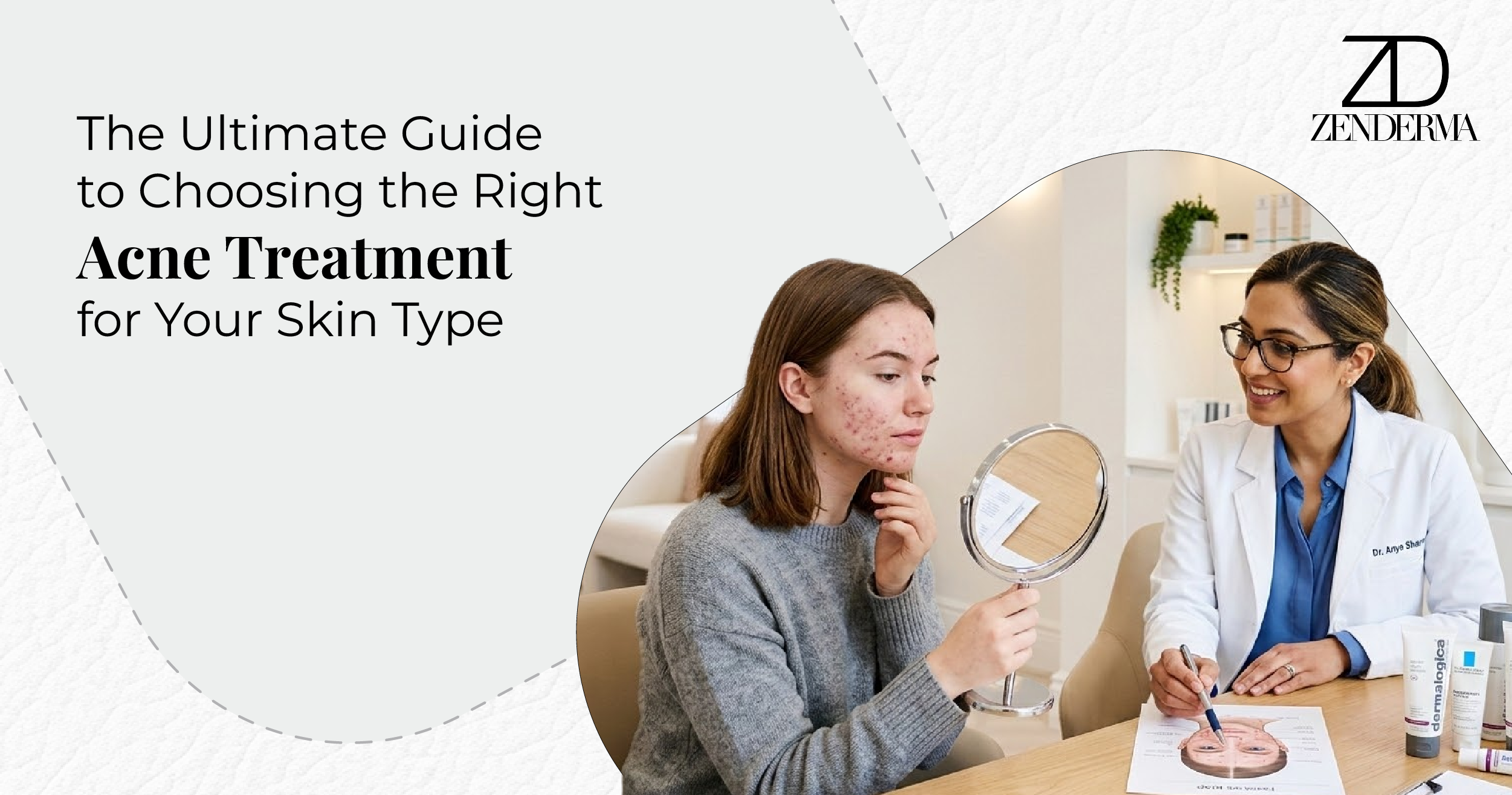
Contrary to the notion that the fight against acne should focus solely on treating and combating it, the reality is that providing care and support is ultimately more effective. Acne is complicated, due to a combination of genes, hormones and the environment, and it is the things that you do on a daily basis that ensure your effective clinical treatments work. It involves allowing your skin to naturally utilise its own tools to heal instead of attacking inflammation.
In this blog we address the ideal morning and evening routines, the real deal about food and acne and how to care for acne-prone skin in the long run through effective acne-prone skin care practices. By learning about the biological needs of your pores, you can break the cycle of irritation and start on the road to a healthier, smoother complexion.
The Basics of Fixing and Restoring Skin
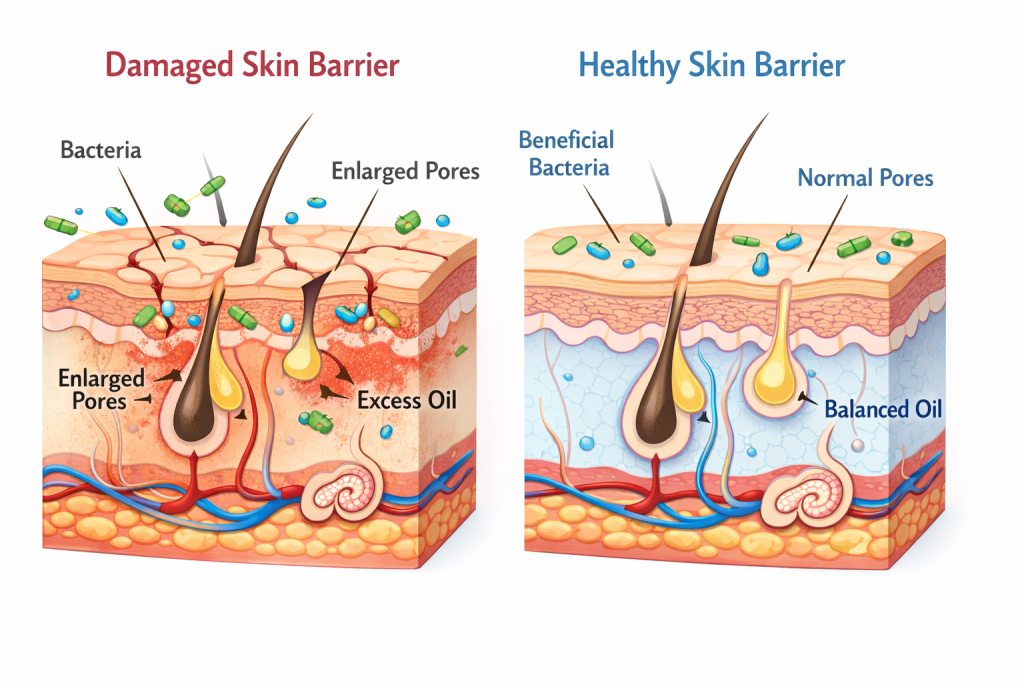
The first thing to do when you have acne is to take care of the skin’s protective barrier. People often think that “drying out” a pimple will make it heal faster, but this isn’t true. When you scrub your skin hard or use strong alcohols, the brain tells the body to make too much sebum. This oiliness that comes back often causes more clogs.
On the other hand, a healing-centred approach focuses on reducing the number of acne-causing bacteria while also calming the sebaceous glands, all without harming the skin. Be careful when you treat your face so that you don’t get post-inflammatory hyperpigmentation (PIH), which are dark or red spots that stay after an acne scar has healed.
Daily Routines for the Best Defence
“Defence” should be the first thing you think about in the morning. Sebum can oxidise and cause inflammation when it is exposed to blue light, ultraviolet radiation, and air pollution all day.
- Soft Washing: Use a pH-balanced wash to get rid of any sweat or makeup that was left on overnight.
- Try using a serum with vitamin C or niacinamide to help your body’s antioxidant defences.
- Water is important for oily skin, and it doesn’t cause acne. Use a moisturiser that isn’t greasy and is very light.
- A broad-spectrum SPF is a must because sunlight dries out the skin and makes acne scars worse. You must wear a mineral sunscreen with an SPF of 50.
Nightly Routines for the Best Health
The skin heals the most at night. This is the best time for activated substances that speed up cell turnover.
- First, put on a balm with oil, and then a gel with water. This is called the double cleanse. Long-lasting sunscreen and makeup will be completely dissolved, so there is no chance of “congestion acne”.
- Put your prescription medicines on skin that is clean and dry. This includes specific actives like salicylic acid, azelaic acid, or retinoids.
- To keep water from evaporating through the skin, “seal” it with a ceramide-rich moisturiser.
Important Steps to Take When You Have Acne
| Regularity of Patterns | The Main Benefit |
| A Pillowcase Made of Velvet | Every week, clean off the dirt that has built up. Stops germs and friction from building up |
| No Politeness Zone | Always Keeps scars from forming and stops infections from spreading. |
| Get rid of grime on your phone’s screen | Every day, it cleans the jawline of extra oil and germs. |
| Water to Stay Hydrated | Always Makes sure that cells are detoxified |
The Gut-Skin Axis and the Effect of Food
Your whole diet can cause systemic inflammation, even though chocolate by itself probably won’t give you acne. When you eat a lot of sugary snacks and white bread, your insulin levels go up, which makes your body make more oil.
Eating foods that fight inflammation, like zinc-rich seeds, leafy greens, and fatty fish (which is high in Omega-3 fatty acids), can help your skin from the inside out. The British Association of Dermatologists has some great resources that are run by patients. You can find more information about how food and lifestyle affect chronic skin disorders there. The National Library of Medicine also has clinical studies that look at how acne and gut health are related.
A Scientific Study of Professional Intervention
A professional “boost” may be needed to break a cycle of breakouts that happens over and over again because of normal activities. Clinical therapies are designed to penetrate more deeply than over-the-counter treatments. Some chemical peels can help break the “glue” that keeps dead skin cells in the pore. We’ve gone into great detail about the different types of chemical peels to help you choose the one that will work best for your skin type.
Acne can be treated at any stage, from the first clogged pore to the last stages of scar healing, with a mix of home care and professional help.
Zenderma: Why Should You Get Professional Advice From Them?
Different people have different levels of skin tolerance. You might have a bad reaction to something that helps a friend. If you tend to get acne, Zenderma – Skin care clinic, can help you make a personalised care plan that takes into account the biology of your skin. Our doctors don’t just treat the symptoms; they also look into the root causes to make sure your results last.
Patient safety is our top priority at our medical facility. We want to give you the information and skills you need to feel good about your skin for the rest of your life. This includes knowing what kind of acne you have and suggesting medical-grade topicals.
Above all else, dependability
Many people make the mistake of looking for a “miracle cure” and switching products all the time. Skin cells usually take about 28 to 40 days to renew themselves. You have to stick with your behaviours for at least two months if you want to see the results. Patience is a strong active ingredient.
Conclusion: Getting a Healthy Balance with Zenderma
Lastly, it takes a long time for skin to heal, not a short one. Washing your face gently on a regular basis, staying out of the sun, and seeing a dermatologist when you need to can all help your pores heal. Picking the right allies and sticking to a routine are two important parts of effective acne-prone skin care. With Zenderma’s help, you can get the clear, glowing skin you deserve. We’ll help you navigate the maze of acne.
FAQS
1. How often should I change my routine if my skin is prone to acne?
You should give any new product at least six to eight weeks to work because it takes time for skin cells to grow back and look better.
2. My skin is very oily. Is it okay to skip moisturiser?
No, dry skin makes more sebum to make up for the moisture that has been lost, so you should not skip the moisturiser.
3. Should I pop a pimple if I see a whitehead?
Don’t pop it; this could let germs get deeper into the skin, which could lead to more inflammation and scarring.
4. Is it better to wash my face with hot or cold water?
Essential oils can be removed by hot water, but ice water can’t dissolve sebum. So lukewarm water is best.
5. Does being anxious really cause pimples?
A common sign of stress is the release of the hormone cortisol, which causes the body to make more sebum. This is often called a “stress flare-up.”
6. Will wearing a face mask cause acne to break out?
You should wash your reusable masks every day to keep “maskne” from happening, which is caused by trapped heat, friction, and moisture.
7. What part of a skin care routine is most important for acne?
It’s important to keep the skin out of the sun while it heals because acne scars can get darker over time.
8. Is it okay to scrub aggressive acne with your hands?
Yes, physical washes can spread bacteria all over the face and even tear the skin off of breakouts.
9. What does it mean for a product to not cause acne?
Look for the label; it should say whether the ingredients have been tested and won’t clog pores.
10. Can professional treatments help lessen the appearance of acne scars?
After active acne has cleared up, treatments like chemical peels and microneedling can help make the skin feel smoother.

Dr. Vignesh Karthik, MD (DVL)
Meet Dr. Vignesh Karthik, MD (DVL) – the expert mind behind Zenderma. With 15+ years of dermatology experience, he leads with precision and compassion. From advanced skin therapies to aesthetic care, your skin is in trusted hands. At Zenderma, we blend science with a personalized approach for every skin type. It’s not just treatment – it’s expert-driven transformation.