Master the art of shine control with our comprehensive guide to oily skin treatment. Learn how to balance sebum production using professional clinical procedures and advanced skincare ingredients. From salicylic acid to professional chemical peels at Zenderma, discover dermatological solutions designed to minimise pores, prevent breakouts, and achieve a healthy, matte finish for your complexion with long-lasting visible clarity and confidence.
The Professional Guide to Managing Sebum: From Greasy to Glowing
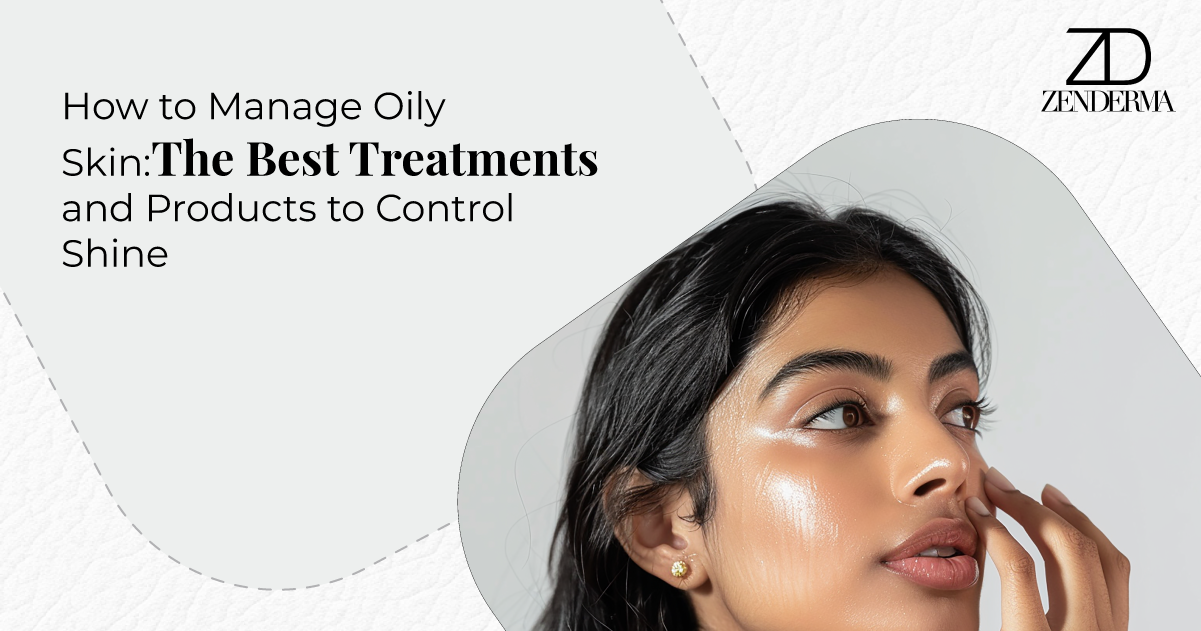
It’s nice to wake up with a glow, but by noon, that “glow” can turn into an oily sheen that makes your makeup look bad and lowers your confidence. Oily skin is a very common problem that happens when sebaceous glands make too much sebum. Sebum is an important part of the skin that keeps it safe and moist. But too much sebum can clog pores, make skin greasy, and give skin that “shiny” look that happens in the afternoon.
Taking care of your skin can be very hard, especially if you use products that say they will give you a “matte finish” but really dry out your skin. If you have oily skin, you need a full plan that includes both home remedies and treatments from a professional. This guide will show you the best ways to oily skin treatment that are available right now. It will also help you move from short-term fixes to long-term skin care. At Zenderma, we know how to figure out what’s causing your oily skin so that you can make a plan that works for you to get a clearer, more balanced complexion.
The Main Reasons For Too Much Sebum
Before we talk about the products, it’s important to figure out why your skin is making too much sebum. What you put on your skin isn’t the only thing that makes it oily; it can also be a sign of what’s going on under the skin.
Genetic Predisposition
If your parents struggled with large pores and oily patches, there is a high probability you will too. Genetics determine the size and activity level of your sebaceous glands. Larger glands naturally produce more oil.
Changes in Hormones
Androgens, which are male hormones that are also present in females, are the primary drivers of oil production. Sebum production can go through the roof during puberty, menstruation, or times of extreme stress. This can lead to “hormonal acne.”
Conditions in the Environment
When the weather is hot and humid, the skin works harder to protect itself by making more oil. If you live in a cold, dry place and use products that dry out your skin, on the other hand, your skin may make too much oil to make up for the dryness. This is known as “reactive seborrhoea.”
The Essential Ingredients for Shine Control
When browsing for products, the ingredient list is your most powerful tool. If you have oily skin, you need to find products that say “non-comedogenic” on the label and have ingredients that will help control the oil without hurting the skin.
- If you have oily skin, salicylic acid (BHA) is the best thing you can use. Because salicylic acid can dissolve in oil, it can easily get through the skin and break down the “binding” agent that holds dead skin cells and oil together.
- Niacinamide (Vitamin B3) is a magical substance that controls sebum production, makes big pores look smaller, and strengthens the skin’s lipid barrier to keep moisture in and irritants out.
- Hyaluronic Acid: Many people with oily skin make the mistake of skipping moisturiser. Oily skin can still be dehydrated. Hyaluronic acid provides weightless hydration by pulling water into the skin without adding oil.
- Retinoids: These Vitamin A derivatives accelerate cell turnover and help keep pores clear, which indirectly manages the oily environment that leads to breakouts.
- Clay (Kaolin and Bentonite): Ideal for weekly masks, these minerals act as a vacuum, drawing out impurities and surface oil to give an immediate mattifying effect.
Zenderma: Professional Solutions for Oily Skin Treatment
While a solid home routine is the foundation, professional clinical care can provide results that over-the-counter products simply cannot achieve. At Zenderma, we utilise medical-grade technology and expert dermatological insights to tackle oil at its source.
Medical-Grade Chemical Peels
We offer specialised peels that use high concentrations of Beta Hydroxy Acids (BHAs) and Alpha Hydroxy Acids (AHAs). These treatments exfoliate the skin more deeply than home scrubs, helping to “reset” the oil production levels and smooth out skin texture.
HydraFacial for Deep Congestion
The HydraFacial is an exceptional oily skin treatment because it simultaneously exfoliates, extracts, and hydrates. It gets rid of blackheads and extra sebum in the pores and sends oil-regulating antioxidants to the skin using a special vortex fusion delivery system.
Light and Laser Therapy
Some laser treatments can specifically target the sebaceous glands and make them smaller and less active. This is a more permanent answer for people who think that creams that go on the skin aren’t enough to keep their shine in check.
Carbon Peels, also known as the “Hollywood Peel”
You need to put a liquid carbon solution on your face for this method to work. A laser is then passed over the skin, destroying the carbon particles and taking dead skin cells, contaminants, and excess oil with them. It is highly effective for immediate pore refinement.
Creating the Ultimate Daily Routine
A consistent routine is your best defence against a greasy T-zone. Here is how you should structure your day to maximise oil control.
| Step | Morning Routine | Evening Routine |
| Cleanse | Use a gentle foaming cleanser with Salicylic Acid. | Double cleanse: Micellar water followed by a gel cleanser. |
| Tone | Apply a Niacinamide-based toner to refine pores. | Use a BHA exfoliant (2–3 times a week). |
| Treat | Vitamin C serum for antioxidant protection. | Retinol or a lightweight repair serum. |
| Moisturise | Oil-free, mattifying gel moisturiser. | Lightweight, non-comedogenic night cream. |
| Protect | SPF 30+ with a dry-touch or mineral finish. | (N/A) |
The Importance of Cleansing Correctly
It is tempting to scrub your face until it feels “squeaky clean.” However, this is counterproductive. Harsh surfactants like Sodium Lauryl Sulphate (SLS) can take away the oils that your skin naturally produces. This makes your skin produce even more oil to make up for it. Always pick cleansers that are pH-balanced.
Changes to Your Lifestyle That Can Help Control Oil
Your skin is usually a good indicator of how healthy you are. Taking care of oily skin on the outside is important, but making some changes on the inside can also help you get matte skin.
- Watch the Glycaemic Index: High-sugar diets can cause insulin spikes, which in turn stimulate androgen production and lead to more oil. Try to swap refined sugars for complex carbohydrates.
- Stay Hydrated: Drinking plenty of water helps maintain the balance of oil and water in your skin. When you are dehydrated, your skin may produce more oil to compensate for the lack of moisture.
- Manage Stress: Cortisol, the stress hormone, is closely linked to sebum production. Incorporating yoga, meditation, or even regular exercise can help keep your skin calmer.
- Clean Your Gear: Your phone screen and pillowcases are breeding grounds for bacteria and old oil. Change your pillowcase every few days and sanitise your phone daily to prevent “transfer” breakouts.
Common Myths About Oily Skin
To properly manage your skin, you must ignore common misconceptions that could be doing more harm than good.
- Myth: Oily skin doesn’t age. While oil can help keep skin supple and may hide fine lines slightly longer, oily skin still suffers from sun damage and loss of collagen. You still need anti-ageing care and SPF!
- Myth: Sun exposure “dries out” oil. The sun may temporarily dry surface oil, but it also damages the skin barrier and causes inflammation, which eventually leads to a surge in oil production.
- Myth: You should wash your face 5 times a day. Over-washing is the fastest way to irritate your skin. Twice a day is sufficient, with an extra wash only after a heavy workout.
The Last Word on Sebum: Why Consistency is Key
When you have oily skin, you don’t want to “win a war” against your sebaceous glands; you want to find a balance. You can easily get rid of shine and get a clearer complexion by using the right mix of active ingredients, like Niacinamide and Salicylic Acid, and sticking to a routine. But if you want something more dramatic, a professional clinic like Zenderma can give you the deep-cleansing and oil-controlling benefits that over-the-counter products can’t.
You can get healthy, glowing skin without needing a lot of makeup with either a medical-grade chemical peel or a clarifying HydraFacial. Today is the first step toward a better tomorrow. Book you appointment with Zenderma, the best skin care clinic in chennai.
FAQs
1. What is the best professional oily skin treatment for big pores?
Chemical peels and laser treatments work very well because they remove dead skin cells and can even make the sebaceous glands smaller, which lowers oil production.
2. Why does my skin feel greasy but look flaky?
This is a case of “dehydrated oily skin,” which means your skin is dry but making too much oil to make up for it. You need to use humectants like Hyaluronic Acid to get the balance back.
3. Is it okay for me to use face oils if my skin is oily?
Yes, but you need to choose “dry” oils like Jojoba or Rosehip oil. These oils are like the natural oils in your skin and can help control oil production.
4. If my skin is oily and shiny, how often should I exfoliate?
Most dermatologists will tell you to use a chemical exfoliant (BHA) instead of a physical scrub to avoid irritation and tiny tears. They say you should do this 2–3 times a week.
5. Does wearing makeup make my skin oilier?
Not really, as long as you use products that are “oil-free” and “non-comedogenic” and that you really make sure to double cleanse at the end of each day.
6. Is a toner necessary for oily skin?
Technically, no. But if you choose an alcohol, free toner with ingredients such as Witch Hazel or Niacinamide, it can be very effective in helping to remove the last bits of oil and also in tightening the pores that appear large.
7. Can oily skin become less oily with age?
Definitely, skin oil production gradually decreases as we get older, especially when the hormonal changes that cause fluctuations have settled, for instance, after menopause or after puberty.
8. Should I avoid moisturiser completely if I have very oily skin?
Avoiding moisturiser can make the skin even more oily, so it is better to choose a very light oil-free gel formula to help keep the oiliness at bay.
9. Are blotting papers a good long-term solution for shine?
Blotting papers can be used to get rid of the shine very quickly and easily during the day but they do not eliminate the real reason for the excess oil production.
10. Can diet really influence how oily my skin become?
Sometimes, people who eat a lot of sugar or dairy have more oil production as their skin hormones react to the food.

Dr. Vignesh Karthik, MD (DVL)
Meet Dr. Vignesh Karthik, MD (DVL) – the expert mind behind Zenderma. With 15+ years of dermatology experience, he leads with precision and compassion. From advanced skin therapies to aesthetic care, your skin is in trusted hands. At Zenderma, we blend science with a personalized approach for every skin type. It’s not just treatment – it’s expert-driven transformation.