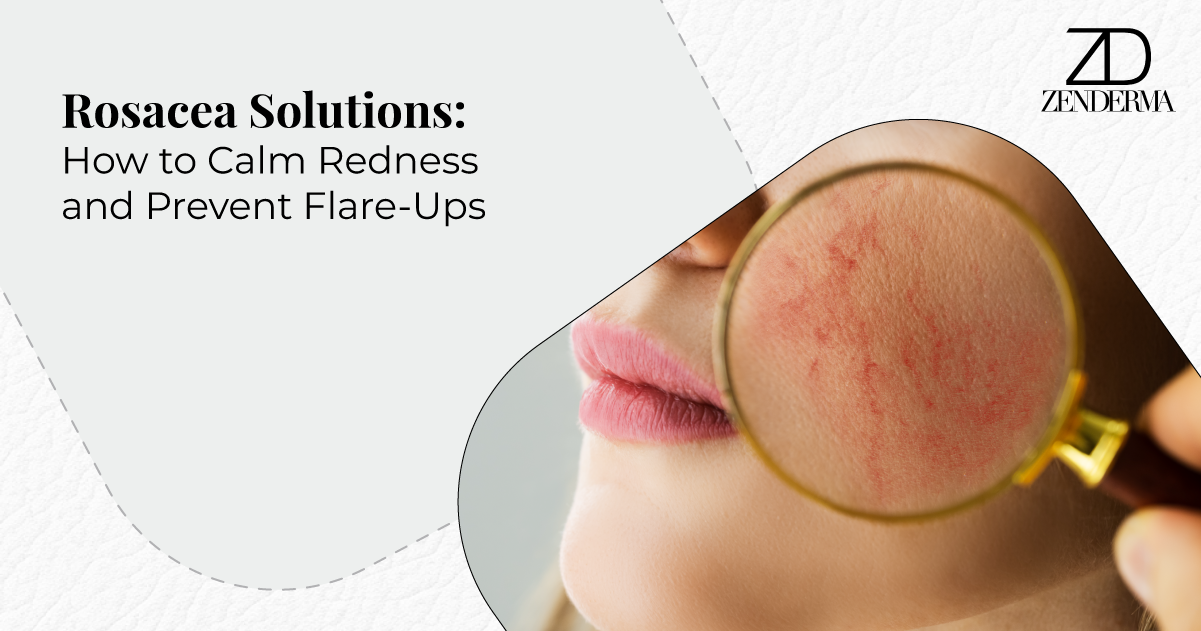
The right rosacea treatment can make your skin feel and look a lot better, but it’s still hard to live with constant redness on your face. In this Zenderma guide, we’ll talk about some of the newest medical treatments, lifestyle changes, and clinical therapies that can help with inflammation. Find out what makes you flush and how to control it with a professional skincare routine that will keep your skin looking healthy and balanced.
An Introduction to Rosacea and Skin Sensitivity
A flush is often seen as a sign of good health, but rosacea can cause both physical pain and social anxiety because it makes the skin red all the time. Rosacea is a long-term inflammatory skin condition that mostly affects the face. Common symptoms include redness, visible blood vessels, and sometimes small pimples filled with pus. It is easy to misdiagnose and treat because it looks and feels like sunburn or acne.
The following blog post goes into detail about how face flushing works biologically, the best medical-grade treatments available right now, and some easy changes you can make to your daily life to help your skin stay calm. Finding the right balance between protection and professional rosacea treatment is important for long-term stability and skin health.
What Makes Your Face Red in the First Place?
If you have rosacea, your skin isn’t just “sensitive”. The environment, the circulatory system, and the immune system all have a part to play in this complicated process. Research indicates that individuals with rosacea may exhibit an exaggerated inflammatory response and neurovascular dysregulation. This means that the blood vessels in their faces swell up too easily and stay that way for too long.
The first step in successfully managing this condition is to understand that it is a medical problem and not just a cosmetic flaw. Modern dermatology has many effective treatments that can put the problem into remission, even though there is not yet a permanent cure. When you figure out what’s causing the inflammation, your skin can be clearer and nicer again.
Learning to Spot and Deal with Your Own Triggers
Both active therapy and prevention are very important. Most flare-ups happen because of things in a person’s environment or way of life that cause blood to flow more quickly to the skin’s surface. Some common triggers are:
- Sunlight: The most common cause; even a short amount of time in the sun can cause a long-lasting flush.
- Extreme heat or cold, saunas, and cold breezes can all cause inflammation of the skin.
- In terms of eating choices, common culprits include spicy foods, hot drinks, and alcohol, particularly red wine.
- Mental and Emotional Distress: When we’re stressed or worried, our bodies release chemicals that make our blood vessels wider.
- Topical irritants include scrubbing too hard, using a toner with alcohol in it, or putting strong perfumes on the skin.

Maintaining a “skin diary” can be a helpful way to track changes and identify patterns. By keeping track of what you eat, the weather, and how your skin reacts, you can learn to spot patterns and stay away from things that hurt you.
Rosacea: Signs and Symptoms
| Type of subtype | First Thoughts | Regular Problems |
| Ischaemic thrombocytopenic purpura | You can see the blood vessels, and they are pulsing. | Pain that hurts and stings at the same time |
| The presence of pustules | Pimples and inflammation together | The worst thing that could happen is adult acne. |
| The plant-based | Changes in the thickness and feel of the skin | It is most common on the nose (rhinophyma). |
| Ocular | Redness and irritation of the eyes | Eyes that are dry or gritty |
Medical and Clinical Methods That Work for Rosacea Treatment
1. Skin Medicines
Dermatologists often recommend topical treatments that contain ivermectin, metronidazole, and azelaic acid. These ingredients calm down the inflammatory response and kill off Demodex mites, which are more common on rosaceous skin. Putting on a lotion that constricts blood vessels can temporarily reduce redness and give you instant relief.
2. Medicines That Are Taken By Mouth
Low-dose antibiotics are often used to treat papulopustular rosacea because they are very good at reducing inflammation, not because they kill bacteria. These help get rid of pimples and cool down the skin.
3. Treatments With Lasers and Light
Intense pulsed light (IPL) and vascular lasers (like the VBeam) are cutting-edge medical treatments that work well on “broken” capillaries. Light-based therapies can collapse the small blood vessels near the skin’s surface, which lowers the baseline redness by a lot. This is different from topical treatments. Our guide to different types of chemical peels has more information about light-based therapies and how they stack up against other resurfacing options.
The Benefits of a Gentle Skincare Routine
People with rosacea have skin barriers that don’t work right. When the barrier isn’t strong enough, moisture and irritants can get through, starting a vicious cycle of inflammation.
- First, wash the area with a gentle, soap-free cleaner that won’t strip the skin of its natural oils.
- Find a moisturiser that has ceramides, hyaluronic acid, or niacinamide in it to help your skin heal.
- Instead of a chemical filter, which can sometimes make your skin feel like it’s burning, use a mineral sunscreen that has zinc oxide or titanium dioxide in it.
The National Rosacea Society has a lot of peer-reviewed information for people who want to learn more about how rosacea is classified in the medical field or about current and future research in this area. The British Association of Dermatologists also has great patient information booklets with rules that are specific to the UK.
Why Rely on Zenderma’s Experts?
When facing a major health problem such as this, you need an individual plan in order to help solve it and not a “one size fits all” approach. Zenderma – Best skin care clinic in chennai is your top choice for an effective and safe skin product. Our doctors know that rosacea skin reacts differently, so they make sure that each patient gets their own treatment plan.
When you come to our clinic, you can get professional tests that can tell the difference between different types of the disease. We are very careful when we treat your skin, whether you need medical-grade topicals or modern light treatment, so that it stays calm and doesn’t get any more irritated.
A Complete Plan for Clear Skin
To get a calm complexion, you usually can’t just use one product. You need to take a whole approach. It means using the right medical treatments, eating foods that fight inflammation, and keeping your skin safe from the British weather. Following a regular routine with the help of an expert isn’t always easy, but the benefits are huge.
Conclusion: Reclaiming Confidence with Zenderma
Lastly, rosacea is a long-term condition, but that doesn’t mean you have to let it control how you feel or look. You can keep flushing under control and stop rosacea from coming back by avoiding things that make it worse and using a rosacea treatment that has been shown to work. Even with these problems, the Zenderma team is dedicated to giving you the best care and newest solutions so that your skin stays healthy and beautiful.
FAQS
1. What are some rosacea treatments that won’t make my sensitive skin worse?
Zenderma has medical-grade, fragrance-free products made for people with sensitive skin. You should talk to an expert there about what you need.
2. Can you use anti-aging products on skin that has rosacea?
It is important to choose mild derivatives like Retinaldehyde or Bakuchiol instead of the stronger Retinol, as the latter could cause flare-ups.
3. Does the food I eat make my skin redder?
Yes, a lot of people get a bad blush when they drink alcohol or eat spicy foods because their blood vessels expand quickly.
4. Are rosacea and adult acne the same thing?
Both conditions cause bumps, but rosacea is caused by irritation of blood vessels instead of clogged pores, and it usually doesn’t have blackheads.
5. Could the redness go away completely?
Even though the problem lasts a long time, many people can get to a point where their skin looks completely clear with regular care and professional help.
6. I have rosacea. Will stress make it worse?
Stress can cause a neuro-inflammatory reaction that makes the face turn red right away and in a big way.
7. Is it safe for someone with rosacea to get a facial?
If you have sensitive skin, you shouldn’t get a regular facial with steam and harsh extractions unless it’s a medical-grade one.
8. Is a chemical exfoliant better than a physical one?
For your skin, physical scrubs aren’t the best choice. Instead, try a mild chemical exfoliant like gluconolactone (a PHA). It won’t harm the skin’s protective barrier as much.
9. Why do my eyes hurt and feel scratchy when my skin breaks out?
Ocular rosacea is a common type that can make the eyelids and surface swell up. This is why it’s important to be extra careful to avoid it.
10. When can you expect to see the effects of treatment?
After 4 to 8 weeks of medical treatment, a noticeable improvement in redness and inflammation usually doesn’t happen.