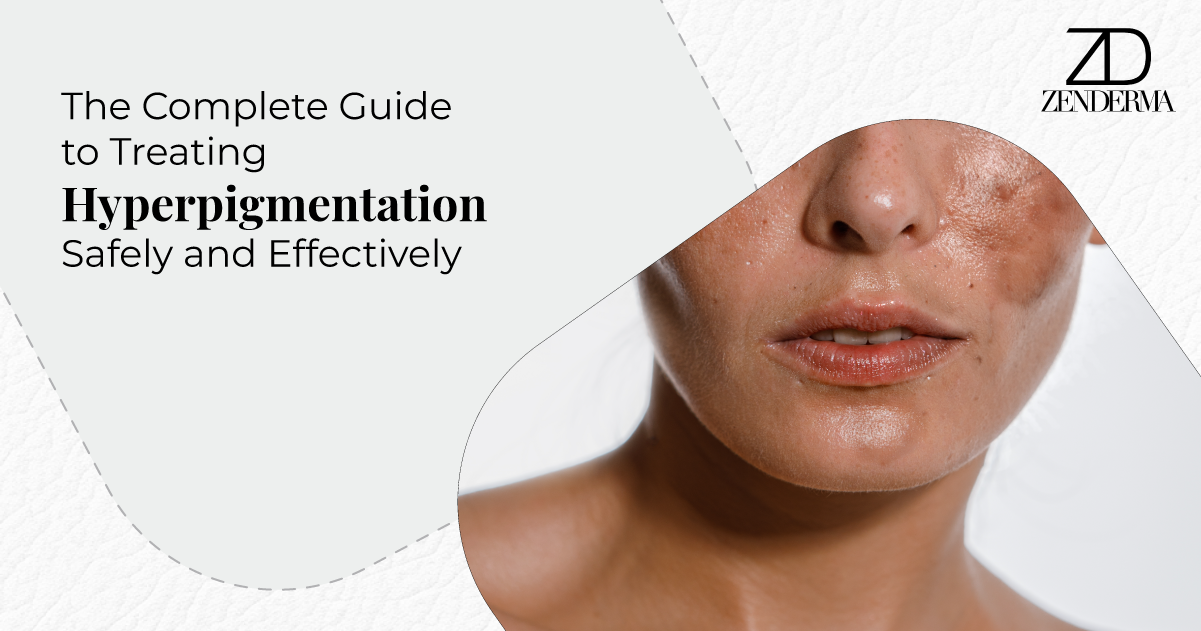
To get an even skin tone, you need to know how to heal cells properly. This guide covers all of the effective hyperpigmentation treatments that are available today, from topical retinoids and vitamin C to more advanced professional peels. Zenderma can safely and permanently restore your natural skin tone, whether you have melasma, sunspots, or post-inflammatory marksa
Introduction: Learning About the Science Behind Skin Discolouration
A clear complexion is often the first step to feeling good about your skin, but many people have stubborn dark spots. Hyperpigmentation is one of the most common reasons people see a dermatologist, and seeking the right hyperpigmentation treatment is essential for effective results. It can be caused by sun exposure, hormonal changes, or scarring from acne. The first step to making a successful change is to understand the basic problems. This guide gives a clinical but easy-to-understand overview of how to deal with pigmentary issues using modern science and professional knowledge.
What Is Hyperpigmentation Exactly?
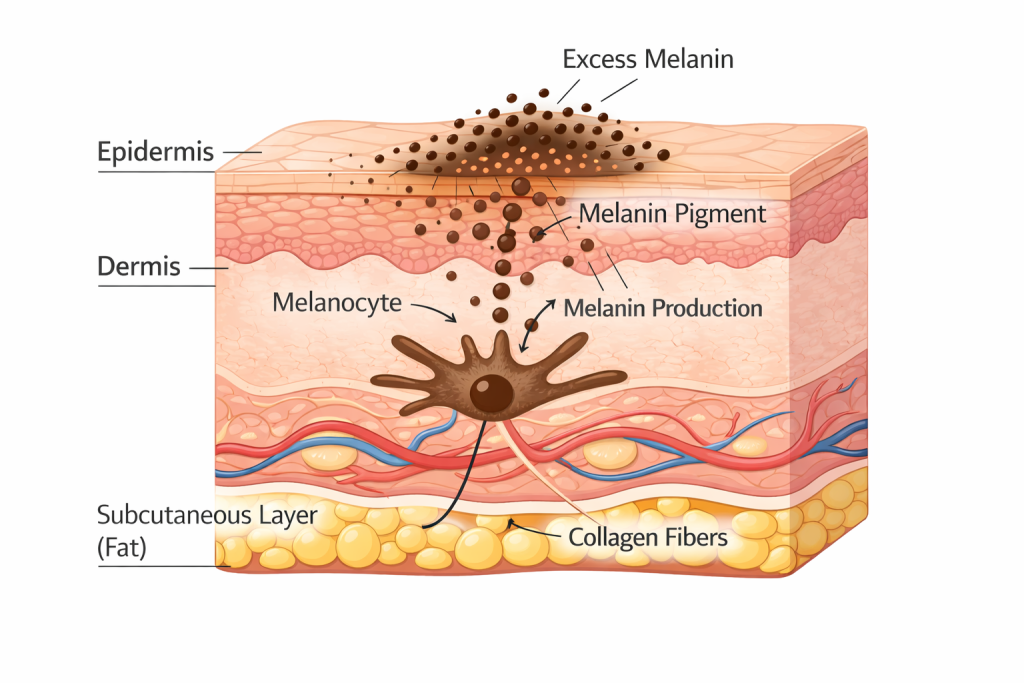
Hyperpigmentation is a medical term for skin spots that are darker than the skin around them. When melanocytes, which are specialised cells, make too much melanin, the pigment that gives skin its colour, this happens. These “dark spots” usually don’t hurt your health, but they can look bad.
Common Ways to Add Colour to Skin
- Long-term exposure to ultraviolet radiation causes solar lentigines, which are also called sun spots. Most of the time, they can be seen on the hands and face.
- When a woman’s hormones change, big patches of melasma, which are also called the “mask of pregnancy,” may show up.
- Post-inflammatory hyperpigmentation (PIH) is when the skin gets darker after an inflammation, like acne or eczema, and stays that way.
How Do Professionals Deal With Hyperpigmentation Treatment?
Most of the time, treatment for hyperpigmentation includes both in-office procedures and care at home.
1. Exfoliants that are based on chemicals
A professional peel uses an acid, like glycolic, salicylic, or TCA, to get rid of the top layer of dead skin. This treatment lifts pigment by speeding up the turnover of skin cells, which makes the skin underneath look younger and healthier.
2. Treatment with lasers and IPL
Laser treatments use very small beams of light to focus on certain groups of melanin. This energy breaks down the pigment without hurting the tissue around it. It works very well on skin that has been damaged by the sun.
3. Using serums to make discolouration less noticeable after microneedling
Tranexamic acid is a brightening agent that can help with deep, long-term discolouration by causing controlled micro-injuries that help the body make more collagen.
Different Kinds of Therapy
| Different kinds of therapy | The Main Advantage | Suggested Time Frame |
| Peels that use chemicals | Make your skin glow and remove dead skin cells | Once every four to six weeks |
| Laser treatment | Focuses on dark spots | Three to five sessions |
| Retinoids for your skin | Raise the number of cells that die | Daily (Nightly) |
| Serums for vitamin C | Antioxidant protection | Every day night |
What Medical-Grade Skincare Does
Topical intervention is the most important part of maintenance. Look for these important ingredients:
- Vitamin C is a strong antioxidant that stops the enzyme tyrosinase from working.
- Niacinamide stops pigment from getting to skin cells.
- Retinoids speed up the death of pigmented cells.
The most important thing to do is to put on sunscreen. If you don’t use SPF 50+, UV rays will cause melanin to form, which will make any attempt to treat hyperpigmentation less effective.
Putting Safety First: Avoiding Common Mistakes
There are a lot of “quick fix” bleaching lotions for sale online, and they all sound good. But a lot of them have mercury or unregulated hydroquinone in them, which can cause permanent damage or “rebound” pigmentation. Talk to a licensed professional to make sure you get hyperpigmentation treatment with safe, controlled substances.
The British Association of Dermatologists has put out rules about what makes dermatological drugs safe to use in a clinic.
Why Should You Use Zenderma’s High-Tech Skin Care Products?
Every skin story is unique; that is the principle at Zenderma, Skin care clinic in Chennai. Within our medical clinic we integrate rigid medical parameters with the total concept of beauty, providing you with individualised management of your hyperpigmentation. At Zenderma, we combine TGA-approved technology and medical-grade products to target the underlying cause of pigmentation as well as retain the skin barrier integrity. Our medical team strives to produce visible results with the use of proven science-based modalities that look after your skin health over the long term.
Conclusion: The Bright Skin Is Within Reach
An even skin tone will not happen overnight; it takes time and commitment to remove hyperpigmentation. Nevertheless, with the right hyperpigmentation treatment, you can attain a healthy and even skin tone with appropriate protection from the sun and through methods that are proven to achieve your goal.
FAQs
1. What if my skin is sensitive to hyperpigmentation treatment?
You can apply the less stimulating chemicals, such as mandelic acid or azelaic acid. These are known to be gentler and achieve skin brightening without inducing severe pain.
2. When will I see the results?
Usually, you can expect to see visible results within 6 to 12 weeks, which is the time it takes for skin cells to naturally grow back.
3. Will the dark spots come back after treatment?
If you don’t use broad-spectrum sun protection every day, you might see a recurrence because UV rays make melanin.
4. Can you get rid of hyperpigmentation at home?
Over-the-counter actives can help with mild cases, but deep-seated pigment usually needs professional help to get good results.
5. What is the best way for an expert to treat melasma?
For this hormonal problem, you might find that a combination of low-energy laser toning and special chemical peels works best.
6. Do the laser treatments hurt?
You will feel a snap, like a rubber band, but most modern lasers have cooling devices to keep you comfortable.
7. Do I need to take vitamin C every day?
You should take vitamin C every day because it fights free radicals and protects against oxidative stress, which makes existing pigment darker.
8. Can what you eat change the colour of your skin?
A diet high in antioxidants may help, but topical treatments work much better to get rid of specific dark patches.
9. What should I not do when I treat my skin?
Picking at scabs or patches should be avoided because it makes post-inflammatory hyperpigmentation worse.
10. How do I begin using Zenderma?
You can make an appointment for a full skin consultation on our official website to get a personalised plan for treating hyperpigmentation.