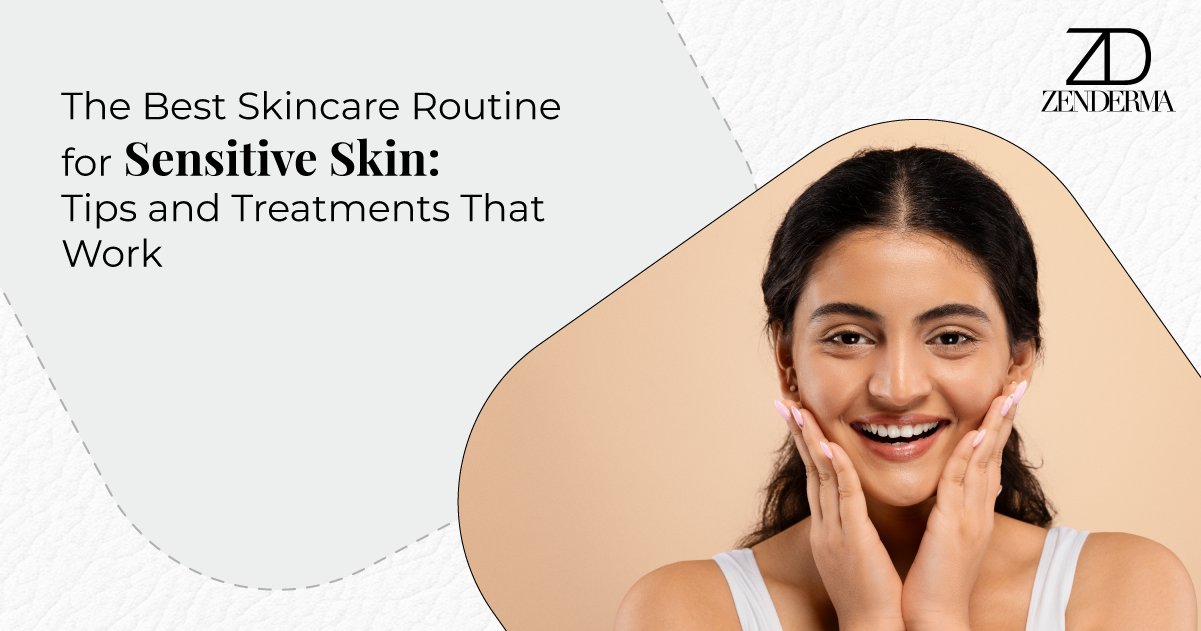
To keep your skin barrier healthy and stop chronic irritation, you need to make a sensitive skin care routine. You can get a glowing complexion without the redness by using professional clinical treatments, avoiding harsh exfoliants, and adding soothing ingredients. Find out how Zenderma uses knowledge from dermatologists to create personalised solutions for even the most sensitive skin types effectively.
Learning About the Issues With A Reactive Skin Type
If your skin gets red, itchy, or stings when you use new products, you may have sensitive or reactive skin. When your skin is sensitive, it usually means that the skin barrier, which is the outer layer of skin that keeps moisture in and irritants out, is damaged. This is not the same as having skin that is oily or dry. If the skin barrier is weak, things like pollution, the weather, and scents can cause inflammation.
Establishing a consistent, sensitive skin care routine is not just about finding products that “don’t hurt”; it’s about choosing bioactive ingredients that actively repair and strengthen your cutaneous defences. In this guide, we will examine the “less is more” approach to caring for sensitive skin, examining the clinical ingredients that help to soothe the skin and the professional treatments that can help to build long-term resilience.
The Four Pillars of a Sensitive Skin Care Routine
To care for sensitive skin, your skincare routine should consist of four key pillars: Cleanse, Hydrate, Protect, and Repair.
1. Gentle Cleansing (Morning & Evening)
- Do not use foaming cleansers that contain Sodium Lauryl Sulphate (SLS), as these can strip the skin of its natural oils.
- The Goal: Remove impurities while keeping the pH balance intact.
- The Ingredient: Look for Ceramides or Glycerin-based creamy cleansers.
2. Hydration that Soothes
- Sensitive skin is often dry because the skin loses water through the damaged barrier (Transepidermal Water Loss).
- Hyaluronic Acid is an important part of the product because it can hold 1000 times its weight in water without being “heavy” or irritating.
- Niacinamide (Vitamin B3) is also good for calming redness and getting ceramides to make more of themselves.
3. Protection Across a Wide Range
- UV rays are a big reason why skin is sensitive and “flaring.”
- The Tip: Pick physical (mineral) sunscreens that have zinc oxide or titanium dioxide in them. They don’t absorb UV radiation into the skin like chemical sunscreens do; instead, they sit on top of the skin and reflect UV radiation.
4. Fixing the Barrier (Every Night)
- This is when your skin starts to “repair” itself.
- Cica (Centella Asiatica), Panthenol, and Squalane are the best ingredients for calming your skin at night.
What to Avoid: The “Red Flag” Ingredients
When making a sensitive skin care routine, it’s important to read the labels. Stay away from these common irritants:
- Essential oils and scents: “Natural” scents like lavender or citrus can cause contact dermatitis.
- Denatured alcohol is often found in toners and can dry out and irritate the skin.
- Mechanical exfoliants, like walnut shells or rough beads, will make tiny tears in the barrier of sensitive skin.
- High Concentration Retinols: Regular retinols can be too harsh unless they say they are safe for sensitive skin care routine.
Professional Treatments for Sensitive Skin
Sometimes, topical products aren’t enough to calm chronic redness or rosacea. In these cases, clinical interventions can help “reset” the skin.
| Treatment Type | How it Helps Sensitive Skin | Benefits |
| Z-Hydra Medifacial | Infuses the skin with cooling serums and antioxidants. | Immediate plumping and reduction in redness. |
| LED Light Therapy | Specific wavelengths (Red/Near-Infrared). | Inflammation relief and cell repair boost. |
| Chemical Peels (Lactic/Mandelic) | Gentler, large-molecule acids that exfoliate without deep irritation. | Brightens dullness while maintaining moisture. |
Zenderma: Specialist Dermatological Care for Fragile Skin
At Zenderma, we recognise that sensitive skin requires a higher level of clinical precision. Many over-the-counter “soothing” products still contain hidden alcohols or preservatives that can exacerbate rosacea or dermatitis. When it comes to skin health, our clinic’s skilled dermatologists put a medical-grade approach first.
At the Zenderma Skin Clinic, we start our individual journey with a high-definition Korean skin analysis. This provides us with a better opportunity to examine your skin’s sensitivity to blood vessels, oiliness, and dryness. A “one size fits all” approach is not something we support. Here is what we have for you:
- Medifacials tailored to your specific needs: ideal for those with delicate skin that requires copious amounts of hydration.
- Talk to professionals to find out if something in your house, food, or a product is causing your illness.
- Approved products by dermatologists: You can ask for products that won’t clog your pores or trigger any allergic reactions to keep your skin healthy and sensitive.
Boosting the Long-term Strength of Your Skin
Keeping your skin calm and bright isn’t easy. By following a simple and gentle skin care routine, you are giving your skin the space it needs to heal from the inside out. Always keep in mind that it’s better to stop something from happening than to fix it. A strong skin barrier today will stop the things that cause inflammation tomorrow. At Zenderma, we are dedicated to helping you navigate the complexities of reactive skin with science and empathy. Our dermatologist-led clinic is ready to guide you toward products and treatments that finally deliver results without the discomfort.
Ready to soothe your skin? Contact Zenderma, the best skin care clinic in chennai, today to book your clinical skin analysis and start your personalised journey to healthy, resilient skin.
FAQs
1. When starting a new sensitive skin care routine, how long before sensitive skin starts to feel better?
Your skin’s protective layer won’t begin to heal for another four to six weeks, but you should start to feel less tight and stinging after just a few days.
2. Can I use Vitamin C on my sensitive skin?
Yes, but you should opt for a stable, low concentration form such as Magnesium Ascorbyl Phosphate rather than the too acidic L-Ascorbic Acid.
3. Is it normal for my skin to feel “tight” after I wash it?
No, if your skin feels tight, it means that your cleanser is too harsh and stripping your skin of its natural lipids. You should change to a cream cleanser that doesn’t foam and doesn’t contain soap.
4. Why does my skin react to products even if they are “Natural”?
“Natural” does not necessarily mean “safe” for sensitive skin; many plant extracts and essential oils are highly allergenic and will cause more reactions than their synthetic, clinical counterparts.
5. How often should I exfoliate if my skin is reactive?
Exfoliate no more than once a week or once every two weeks with a gentle PHA (Polyhydroxy Acid) rather than harsh scrubs or strong AHAs.
6. Does Zenderma have any treatments for Rosacea?
Yes, we do. We have LED Light therapy and medifacials that are designed to strengthen the vascular walls to alleviate persistent flushing.
7. If I have sensitive skin, should I avoid exfoliation totally?
Not really, but it has to be limited and very soft, because too much exfoliating can harm your skin barrier even more.
8. Does stress have the potential to trigger sensitive skin?
Yes, stress can cause inflammation and skin flare, ups since it adversely affects the skin’s natural defence mechanisms.
9. Is double cleansing suitable for reactive skin types?
Yes, it might be if you use mild, fragrance-free products and stay away from strong foaming cleansers.
10. What is the best way to find out whether a new product is good for my skin?
You should always do a patch test first by applying the product to a small area behind your ear or on your inner arm for 24 hours before using it all over.