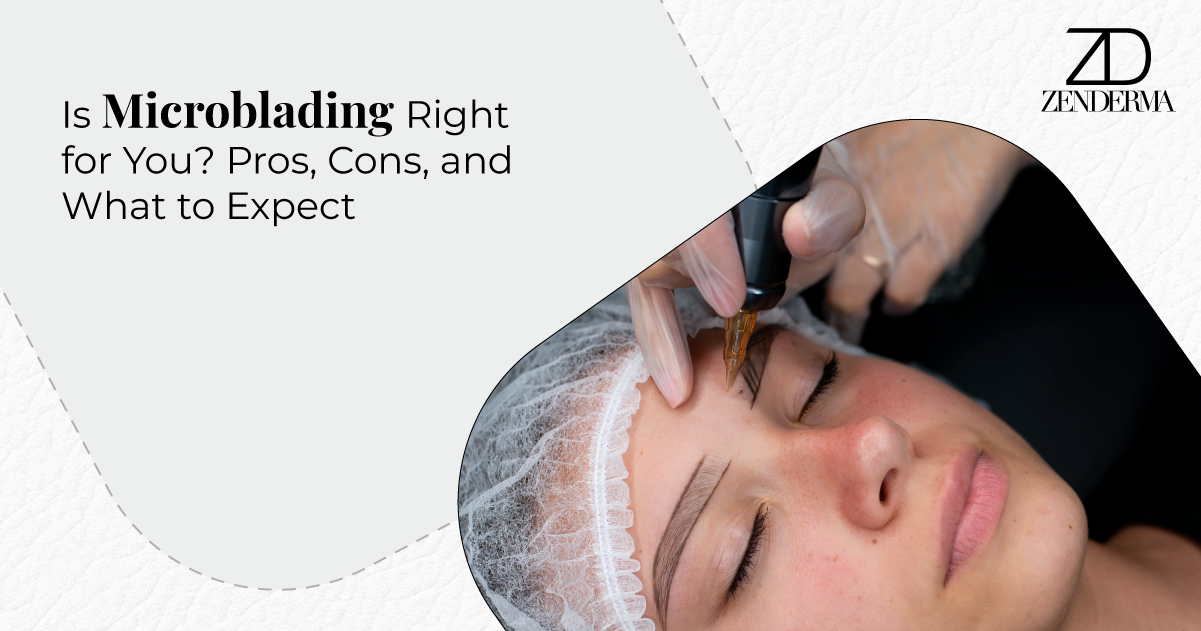
Deciding on a microblading treatment can transform your aesthetic. This ultimate guide will walk you through the advantages and disadvantages, as well as the medical expectations of the process. At Zenderma, we prioritise safety and accuracy to achieve natural and long-lasting results. With our dermatological knowledge, you will discover how this semi-permanent technique can help you achieve thicker eyebrows, simplify your morning routine, and match your facial features.
The Science Behind the Stroke: Is Microblading Right for You?
Millions of people have learned about the benefits of microblading treatment in the ever-changing world of beauty because they want the “perfect brow.” Eyebrows are the most important part of the face. They can make you look older or show how you feel. Some people think that using pencils, gels, and pomades every day is boring and doesn’t work very well. Microblading is a more advanced, semi-permanent method that is somewhere between makeup and permanent tattoos.
As we move through the year 2026, the trend in cosmetic dermatology has changed from the “heavily filled” look to “hyper-realism.” Patients today want a result that looks and feels like real hair. Because this procedure makes tiny cuts in the skin, it is important to think of it as a medical-cosmetic procedure instead of just an aesthetic one. We at Zenderma know that the happiest patient is one who knows what they’re doing. This blog will talk about the science, the risks, and the potential of microblading to help you decide if it’s worth it for your face.
What is Microblading? The Science of Semi-Permanent Pigmentation
Microblading is a manual tattooing technique that uses a specialised handheld tool equipped with a series of tiny, fine needles (a microblade). Unlike traditional machine tattooing, which penetrates the deeper layers of the dermis, microblading deposits pigment into the basal layer of the epidermis.
The Biological Process
When the blade creates a stroke, it mimics a natural hair filament. The body’s immune system responds to these micro-traumas by initiating a healing cascade. Because the pigment is placed more superficially than a standard tattoo, the results are crisp but semi-permanent, eventually fading as the skin cells naturally regenerate and the pigment molecules are gradually broken down by macrophages.
The Role of Pigment Chemistry
Modern microblading treatment relies on high-quality pigments. These are typically iron-oxide based or synthetic organic pigments that are formulated to be biocompatible. The choice of pigment is very important; at Zenderma, we make sure that the pigments are free from heavy metals to avoid the “blue or red” shift, which is common in low-quality permanent makeup.
The Pros and Cons of Microblading
Before embarking on a microblading procedure, it is important to consider the life-changing advantages against the commitment involved.
Comparative Analysis Table
| Feature | Pros (The Benefits) | Cons (The Considerations) |
| Time Management | Saves 10–15 minutes every morning; smudge-proof results. | Requires initial 2-hour session and a 6-week touch-up. |
| Appearance | Delivers a hyper-realistic, 3D hair-stroke look. | Strokes may blur slightly over time depending on skin type. |
| Longevity | Lasts 12–18 months, allowing for shape adjustments as you age. | Requires “colour boosts” every year to maintain vibrancy. |
| Confidence | Restores brows lost to over-plucking, alopecia, or chemotherapy. | The healing phase involves 7–10 days of scabbing/flaking. |
| Physical Activity | Perfectly intact brows during swimming, gym, or saunas. | Cannot exercise or sweat for the first 7 days post-procedure. |
What to Expect: The Procedure Journey
1. The Pre-Consultation Phase
Preparation is key to a successful microblading treatment. You must avoid blood thinners (including aspirin and certain fish oils), caffeine, and alcohol for 24–48 hours before your appointment. Furthermore, skin-sensitising products like Retinol or AHAs should be discontinued a week prior to ensure the skin is stable and not prone to excessive bleeding.
2. The Mapping and Numbing
The first hour is spent on “Brow Architecture.” We use the measurements to make a shape that is symmetrical but not the same, since brows are “sisters, not twins.” A topical anaesthetic is used to make the process painless, which people often say feels like “scratching.”
3. The Process of Micro-Stroking
The artist will then put the pigment into the skin. The artist needs to pay close attention to this process to make sure the pigment is “crisp” and doesn’t “blow out” under the skin.
4. The Healing “Emotional Rollercoaster”
Healing takes approximately 30 days.
- Days 1–5: Brows look very dark and bold (erythema and pigment oxidation).
- Days 5–10: The skin begins to flake (desquamation). Do not pick the scabs, or you will pull the pigment out!
- Days 10–14: Brows may look like they have disappeared (the “ghosting” phase) as new skin grows over the pigment.
- Days 14–30: The colour “blooms” back to the surface in its true, healed shade.
Medical Contraindications: Who Should Avoid Microblading?
While safe for most, a microblading treatment is not recommended for individuals with the following conditions:
- Keloid Scarring: Those prone to raised scars may react poorly to the micro-incisions.
- Active Skin Conditions: Eczema, psoriasis, or active acne in the brow area.
- Diabetes: Poor wound healing can lead to infection and poor pigment retention.
- Pregnancy/Nursing: Due to hormonal shifts and the risk of infection (however small), we delay treatment for expectant or nursing mothers.
- Blood Disorders: Conditions that affect clotting will cause excessive bleeding, which pushes the pigment out of the skin during the procedure.
Why Zenderma Is the Best Place to Get Microblading Done
When picking a clinic for skin-injury surgery, it’s important to stress the importance of cleanliness and artistic skills. Zenderma is where these two important things come together. Microblading is a personalised skin treatment that gives you artistically perfect results in a very clean setting that looks like an operating room.
Our medical facility follows medical-grade sanitary standards, which means that there is no chance of cross-infection or infection, unlike most beauty salons.
We don’t use a “one size fits all” method for mapping the arts. We use the “Golden Ratio” of facial features to make a custom brow design that looks good on you.
We care about you even after you leave Zenderma. We have a way to check on your skin’s health and see how much pigment it keeps on a regular basis.
Do You Think Microblading Is the Best Way to Change Your Look?
Microblading isn’t just a beauty trend; it’s a powerful tool that can change the lives of people with thin or uneven brows.
However, the success of a microblading treatment depends entirely on the skill of the artist and the clinical standards of the facility. You can get a look that seems like it was done without any effort or planning if you really understand the healing process, follow the contraindications, and are committed to the aftercare.
At Zenderma, the best hair care clinic in chennai, we promise to make sure that your aesthetic needs are met in a safe and medically sound setting. Microblading is a strong and beautiful way to replace hair that has been lost or to bring out your natural shape. Choose high-quality care that cares for both your health and beauty to give your face the best.
FAQs
1. How long does a standard microblading treatment actually last?
Typically, results last between 12 and 18 months, depending on your skin type (oily skin fades faster) and your exposure to UV light and active skincare.
2. Does microblading hurt?
We use medical-grade topical numbing creams on our clients to make sure that any pain they feel is only a light tug or scratch.
3. What makes microblading different from getting an eyebrow tattoo?
Microblading uses a handheld device to make very thin, hair-like strokes on the skin’s surface. Tattooing, in contrast, refers to the use of a machine that penetrates deeper and creates a solid, permanent colour block.
4. After the procedure, can I go back to work?
Yes, you won’t have any “downtime” in terms of your physical ability, but your brows will look much darker and more prominent for the first few days.
5. What is the right way to pick a colour for my brows?
At Zenderma, our experts carefully match the colour to your natural brow hair and skin tone so that it looks good even as it fades.
6. What if I don’t like the way my microbladed brows look?
Because the treatment is semi-permanent, it will eventually fade, but we also offer corrective touch-ups or saline removal options for those seeking a change.
7. Can I wear makeup on my brows after microblading?
Additionally, you should avoid applying makeup to the area around your brows until the skin is completely recovered, which in general lasts from 10 to 14 days.
8. Is microblading suitable for oily skin types?
Microblading can be done on oily skin; however, the strokes may fade or blur faster than usual, so you might need a touch-up a little more often.
9. How soon can I get my brows wet after the procedure?
For safe healing and better retention of pigments, we advise you not to get your brow area wet for at least one week.
10. Will the colour change over time?
The pigment will naturally soften and become lighter as it fades but well, made pigments generally do not cause those unwanted colour changes.

Dr. Vignesh Karthik, MD (DVL)
Meet Dr. Vignesh Karthik, MD (DVL) – the expert mind behind Zenderma. With 15+ years of dermatology experience, he leads with precision and compassion. From advanced skin therapies to aesthetic care, your skin is in trusted hands. At Zenderma, we blend science with a personalized approach for every skin type. It’s not just treatment – it’s expert-driven transformation.